Science
Why Lemon Vibrator Orgasms Feel Different With a Partner Present
Your nervous system, attention, and arousal shift dramatically when someone else is in the room. Here's what's actually happening and how to work with it.
Science
Your nervous system, attention, and arousal shift dramatically when someone else is in the room. Here's what's actually happening and how to work with it.
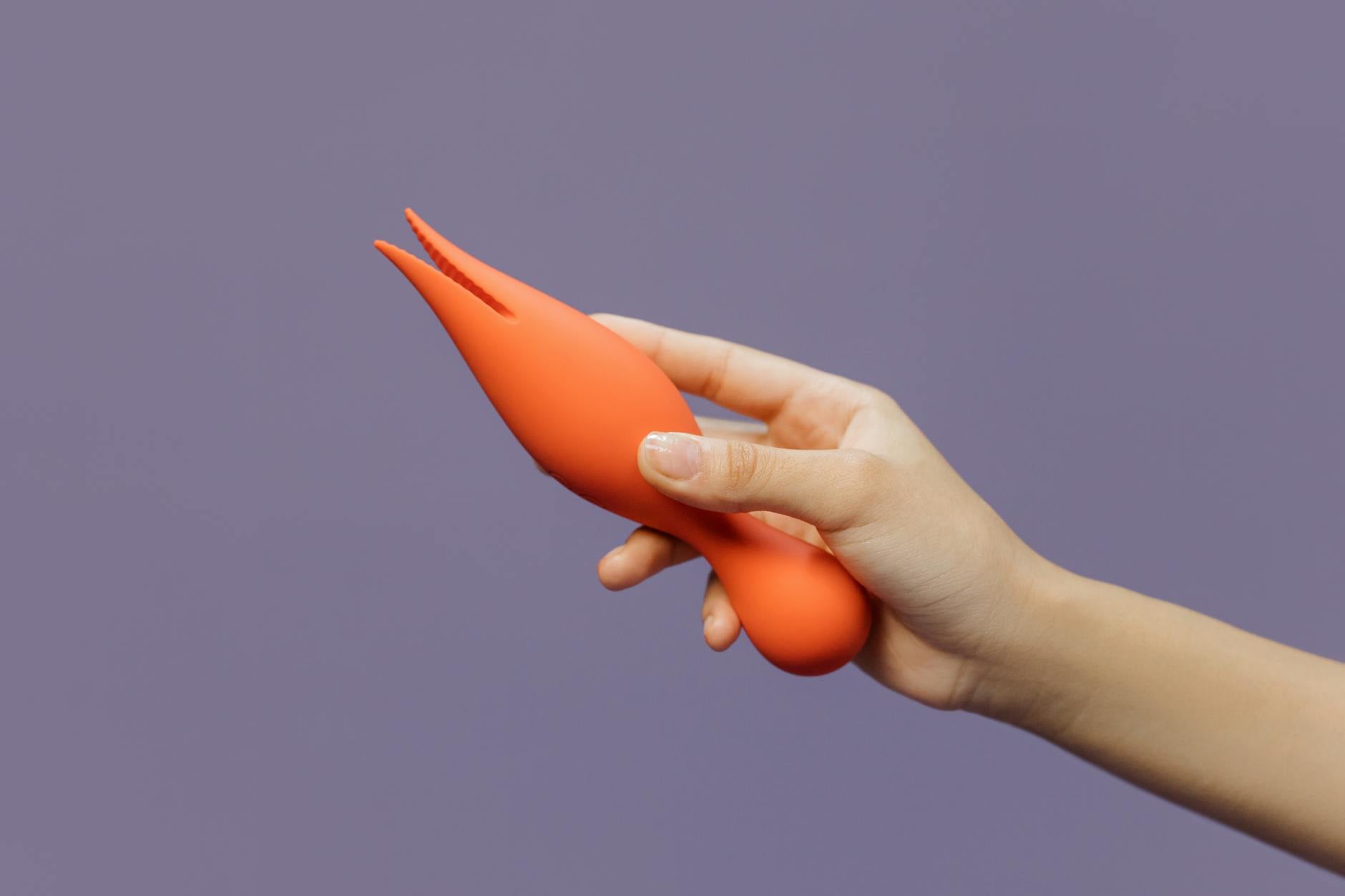
You know the orgasm you have alone with your lemon vibrator. You know exactly how it builds, where it peaks, how long the aftershocks last. Then your partner walks into the room, or sits beside you, or watches, and suddenly the whole thing changes. Not always worse. Often deeper, sometimes harder to reach, sometimes impossibly intense.
That's not in your head. Your nervous system is doing something fundamentally different when someone else is present.
You've probably heard about performance anxiety. That's one piece. But the bigger piece is that your body's arousal system literally operates on two different channels when you're alone versus with a partner.
When you're alone, your parasympathetic nervous system (the rest-and-digest branch) can dominate. You're safe. There are no external stimuli competing for your attention. Your pelvic floor can stay relaxed. Blood flow to the clitoris builds steadily. A lemon vibrator's suction works with your body in this state because your tissues are already responsive, your breathing is rhythmic, and there's zero cognitive load.
When a partner is present, your sympathetic nervous system activates. This isn't bad. It's just different. Adrenaline rises slightly. Your attention splits between the physical sensation and the relational experience. Your pelvic floor tends to tighten (this is automatic, not controllable). Breathing becomes shallower. This can make the same lemon vibrator pattern feel completely different on your body.
Many people report that orgasms with a partner watching or participating feel less intense than solo sessions. This happens for a few interconnected reasons.
First, the pelvic floor tension I mentioned. When your sympathetic nervous system is mildly activated, your pelvic floor contracts. This narrows the vaginal canal and reduces the amplitude of sensation. The lemon vibrator's suction is still working, but it's working against a tighter surface. The stimulation feels more localized, less diffuse through the body.
Second, divided attention. Your brain is processing the partner's presence, their movements, maybe their expressions or sounds. That cognitive load competes with the sensory input from the vibrator. This is why best lemon vibrator patterns for building arousal gradually often require longer, slower build-ups when a partner is involved. Your nervous system needs more time to integrate both channels.
Third, self-monitoring. Even in a trusting relationship, part of you is tracking whether you're "performing" pleasure correctly, whether your partner is enjoying watching, whether you're taking too long. This internal commentary is a massive pleasure killer. It's not weakness. It's neurobiology.
To work with this rather than against it: ask your partner to stay still and quiet during your orgasm, if that feels right to you. Let them know you're managing two inputs at once. Sometimes the presence alone is enough. The suction and sensation don't need commentary.
Other people report that having a partner present, especially if that partner is actively engaged, makes lemon vibrator orgasms more intense than anything they experience alone.
This usually means a few things are happening at once. First, the relational safety is so high that the small sympathetic activation is actually pleasurable. You trust the person enough that their presence doesn't trigger self-monitoring. Instead, it activates a different reward circuit. You're being seen, and being seen is erotic.
Second, if the partner is touching you elsewhere (your chest, inner thighs, neck) while you use the lemon vibrator, you're creating a multi-point sensory experience. The suction on the clitoris becomes the anchor point, but it's not the only input. Your brain is integrating touch from multiple sources, which actually deepens the arousal signal.
Third, some people's arousal systems are activated by the knowledge that they're being desired. Knowing your partner is turned on by watching you take pleasure is itself a form of stimulation. This feeds back into the physical sensation in a positive loop.
Making eye contact during an orgasm with a partner is genuinely difficult for most people. Your eyes want to close. Your head wants to turn away. This is normal, not a sign you're not comfortable.
But if you can hold it, even for a few seconds, something shifts. Eye contact during vulnerability is bonding. Your brain registers it as intimacy. This can flip the narrative from "I'm being watched" (potentially shame-adjacent) to "I'm being witnessed" (affirming, erotic).
This doesn't mean you should force it. But if you're curious why some partners report that holding eye contact deepens the experience, this is why. Your arousal system is getting feedback that says you're safe enough to be this exposed, and that safety itself becomes part of the turn-on.
Your breathing pattern changes everything about how a partner perceives your arousal and how you actually experience it.
When you're alone with a lemon vibrator, you often slip into a natural rhythm: deeper inhales, slower exhales, then rapid breathing as you approach the plateau. Your partner reads these cues as arousal. But here's the thing: how you breathe also shapes your actual experience. Shallow, fast breathing keeps you in sympathetic activation. Deeper breathing, even deliberately, tells your nervous system it's okay to relax.
If you want the intensity to build more easily with your partner present, breathe deeper than you think you need to. Let them hear it. Your partner interprets this as confidence and arousal, and your nervous system interprets it as permission to calm down enough to feel more.
Here's a myth that creates a lot of unnecessary friction: the assumption that you should orgasm at the same time as your partner, or that your partner should be able to bring you to orgasm with a lemon vibrator without you handling it yourself.
Both are nice sometimes. Neither is a benchmark of anything real.
Your arousal timeline is yours. Your partner's is theirs. A lemon vibrator is a tool you're using on your own body. You know exactly what angle, pressure, and pattern work. Your partner doesn't, and learning that in the moment adds cognitive load for both of you. Much more reliable: you guide your own vibrator while your partner provides touch, presence, or simply their attention elsewhere on your body.
This takes off the pressure to perform on schedule. It lets you reach orgasm at your actual pace. And paradoxically, when there's no goal around synchronizing, the shared intimacy often deepens anyway.
Orgasms with a partner present have a different afterglow than solo ones. Your oxytocin levels are different. Your parasympathetic nervous system comes online faster because you're not alone managing the descent. This can feel like a longer, more integrated pleasure.
Some people experience a vulnerability crash after this kind of orgasm. You've been seen, you've let your guard down, and now there's a moment of exposure. This is worth knowing about. Let your partner know that after a few minutes, you might need to be held quietly, or you might need a little space to reintegrate. There's no wrong answer. The knowledge itself prevents misinterpretation.
If you're in a new relationship and curious about using your lemon vibrator with your partner, timing matters. You don't need to jump into shared pleasure immediately. Many people prefer to use a vibrator alone for a while in a new partnership, building the solo experience while the relationship attachment is still forming.
When you do decide to share it, the conversation beforehand is half the work. Not a big sit-down talk. Just a heads-up: "I'm curious to try my vibrator with you nearby. I might need to focus and take my time. I might not finish the first time, and that's okay."
Lowered expectations make pleasure easier to find. How to introduce lemon vibrators to your partner without the awkward talk covers this in detail.
Quick note: your partner's experience matters too. Some partners find watching intensely arousing. Others feel like they should be doing something. Some feel excluded, even if that's not the intention.
Good partnerships leave room for this. "I want to use my vibrator with you here because I want to share this" is different from "I want you to help me." One asks for presence. The other asks for participation. Know which you want.
Your pelvic floor is likely tensing automatically in response to the sympathetic activation that comes with another person's presence. This narrows the vaginal canal and reduces sensation amplitude. The vibrator isn't weaker. Your tissues are tighter. Deeper breathing and longer warm-up time usually help.
Yes. Many people use a lemon clitoral vibrator during penetrative sex for added stimulation. Start at a lower intensity setting and focus on the suction pattern you enjoy solo. Communication about what feels good is essential. If your partner is inside you and you're also using a vibrator, the sensations integrate in interesting ways. Take time to explore what combination works.
No. Your partner can be still, quiet, and simply present. They can kiss your neck or hold your hand. They can touch themselves. They can narrate what they're seeing. All of these are different experiences. Figure out what serves your arousal, not what you think should be sexy.
You've just experienced intense pleasure while being fully seen. Vulnerability often follows exposure, even in secure relationships. This is normal. Let your partner know you might need a moment to reintegrate. Cuddle time, a few minutes alone, or a glass of water all help.
No. Sensitivity isn't a fixed resource that depletes. Different contexts activate different responses. Solo play and partnered play are separate nervous-system states. Using a vibrator in either context won't damage your ability to feel pleasure in the other.
Frequency variation is completely normal. Presence, vulnerability, and divided attention all affect orgasm. Some people need to be alone to finish. Some need specific conditions when a partner is there. None of this is abnormal or a sign that something is wrong with you or your relationship.
Your body isn't malfunctioning when arousal feels different with a partner present. You're just operating in two distinct nervous-system states, and they produce different sensations. Neither is better. They're just different expressions of pleasure.
The more you understand your own response to a lemon vibrator alone, the more deliberately you can work with a partner to create the conditions where pleasure deepens. That might mean more time, different communication, or simply knowing that intensity won't always be identical and that's completely fine.
Your pleasure belongs to you first. Everything else is a gift on top.