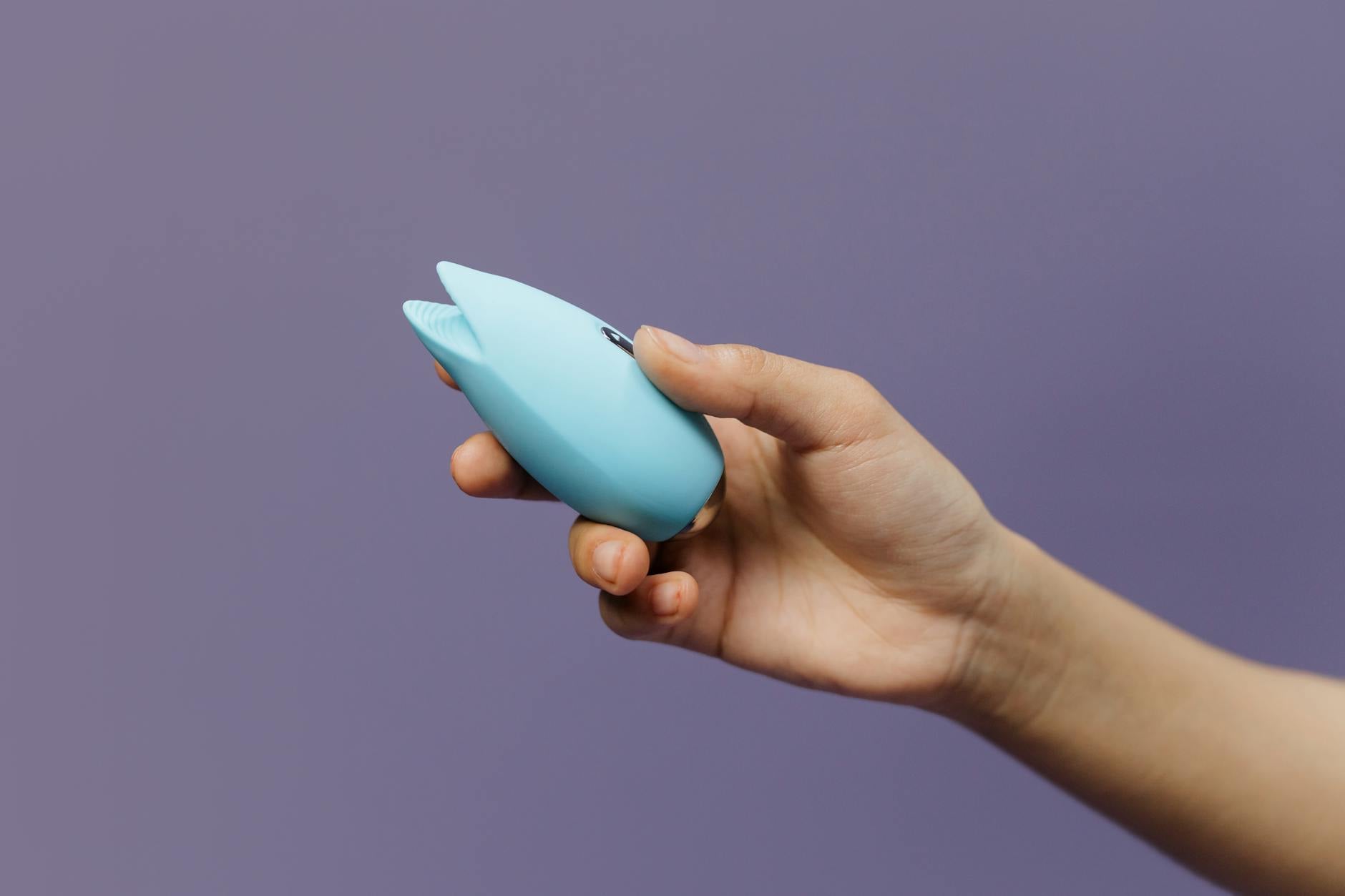
Why Lemon Vibrators Feel Better When Birth Control Affects Your Sensation
Hormonal contraception can blur clitoral feeling. Here's what actually happens, why traditional vibrators often miss the mark, and why lemon clitoral vibrators are worth trying.
Birth control works by suppressing or altering your natural hormone cycle. That's the whole point. But "altering your hormone cycle" doesn't just affect fertility. It affects blood flow, tissue thickness, natural lubrication, and critically, nerve sensitivity in your clitoris.
Many people on hormonal contraception (the pill, the patch, the ring, the implant, the injection) report that orgasms feel muted, take longer to reach, or require more direct stimulation to happen at all. This isn't in your head. It's not low desire. It's a measurable change in how your nervous system responds to touch.
The frustrating part? Most traditional vibrators were designed for a baseline sensory experience. When that baseline shifts, you need a different tool. That's where lemon clitoral vibrators, specifically suction-based lemon sexual toys, create a genuine advantage.
Your clitoris is packed with nerve endings. Around 8,000 of them. All of that sensation depends on blood flow, nerve health, and how quickly electrical signals fire in response to touch.
Hormonal contraceptives suppress or lower testosterone. Yes, people with vulvas produce testosterone, and yes, it matters for sensation and arousal. When testosterone drops, blood flow to genital tissue decreases slightly. Tissue becomes less engorged. Nerves become less responsive. The result is a slower arousal ramp and orgasms that feel less intense or less achievable.
The pill specifically alters estrogen and progesterone, which affect how your vaginal tissue plumps up and how lubricated you become. But the clitoral impact is less talked about and just as real. Studies show measurable decreases in orgasm intensity and frequency for some people on hormonal birth control, particularly within the first few months.
Some people feel nothing different. Some feel dramatically different. Neither is wrong. Both are normal.
Most traditional vibrators rely on high-frequency oscillation (buzzing). Buzzing works beautifully when tissue is already engorged and nerves are firing quickly. But when sensation is muted by hormonal shifts, buzzing often feels either too intense (almost painful) or completely deadening after a few minutes. Your nerves adapt, and nothing happens.
The issue is mechanical. Buzz-based stimulation is essentially a shallow, fast vibration. It works on the surface of nerve endings. When those endings are less responsive, surface stimulation can feel like static on a TV you're not watching. It's technically there, but you're not experiencing it.
Lemon clitoral vibrators, particularly suction-based lemon adult toys, work differently. Instead of vibrating against the tissue, they create a gentle, rhythmic pressure that pulls on the entire clitoral structure, including the internal parts you can't see. This is deeper, more comprehensive stimulation. It engages more nerve pathways at once.
A lemon vibrator using suction technology creates sustained pressure and release patterns that activate more of your clitoral nerve network than traditional toys can. This matters enormously when your sensory baseline has shifted.
Think of it this way. A standard vibrator is like tapping your shoulder repeatedly. A suction-based lem vibrator is like someone holding your hand firmly. The contact is broader, deeper, and engages your nervous system differently.
When birth control has decreased your sensitivity, that broader engagement becomes crucial. You feel more, faster. Orgasms that seemed impossible on a standard vibrator suddenly become reachable. The experience is less about intensity and more about actual signal reaching your brain.
Many people report that the first time they try a lemon clitoral vibrator after months on hormonal contraception, they have their first orgasm in that cycle. They're not more experienced. Their tool changed.
Birth control typically extends arousal time. Instead of 5-10 minutes to reach climax, you might need 15-25 minutes. Standard vibrators make this frustrating because buzzing alone, repeated for 15 minutes, often desensitizes you further.
Suction-based lemon sexual toys are gentler on sustained stimulation. You can stay engaged longer without experiencing the numbing fatigue that comes from continuous high-frequency vibration. The patterns also vary naturally, which keeps your nervous system from adapting and tuning out.
This is why starting at lower intensity settings matters. A lemon vibrator on pattern 1 or 2 is often enough to create sustained pleasure for 15-20 minutes. By the time you increase intensity, your arousal has actually built. You're not fighting against a flattened sensory response anymore.
Hormonal birth control sometimes reduces natural lubrication. Not always, but often enough that it's worth mentioning. Combined with decreased sensitivity, dryness can make any stimulation uncomfortable.
Water-based lubricant paired with a lemon clitoral vibrator is standard. Lube reduces friction, which means the suction sensation feels smoother and more pleasurable. It also creates a seal that enhances the suction effect itself.
If you've been using a standard vibrator dry and it feels painful, water-based lube might be the first thing to try before switching toys entirely. But if you've added lube and sensation is still muted, that's when a lem vibrator's broader stimulation pattern becomes the real game-changer.
If you're starting birth control, expect the first 3-6 months to feel noticeably different. Your body is adapting to new hormones. Sensation shifts aren't permanent, but they're real during the adjustment period.
If you've been on the same birth control for years and suddenly lost sensation, it's worth checking in with your doctor. Sometimes it's just normal adaptation. Sometimes it points to something else happening (medications, stress, relationship dynamics, health changes). Don't assume it's the birth control without ruling out other factors.
For people who know they want to stay on hormonal contraception, lemon vibrators are worth treating as a long-term solution, not a temporary workaround. They work with your body's altered baseline instead of fighting against it.
Resisting the urge to use lemon adult toys constantly is actually important. If your sensation is already lower, intensive daily use can paradoxically dull things further. Your nervous system adapts to any repeated stimulus.
Think of it like volume on a speaker. If you always keep it at maximum, you stop noticing the sound. The same happens with sexual stimulation. Using your lemon clitoral vibrator 2-3 times per week, with rest days between, keeps your sensitivity sharp.
During those off days, other kinds of touch matter. Hands, fingers, your partner's mouth, manual exploration. Variety is what keeps sensation alive. A lem vibrator is a powerful tool, but it's not the only tool.
If you're rebuilding sensation after months of using traditional vibrators unsuccessfully, giving yourself a break from stimulation for 5-7 days can reset your nervous system. Then reintroducing a lemon vibrator on lower settings often creates a more noticeable effect.
If you have a partner, this change in sensation might affect how sex feels for both of you. Communication matters. "I'm on birth control and my body is responding differently to touch" is different from "I'm not attracted to you anymore." Mixing those conversations derails both.
Many couples find that a lemon clitoral vibrator becomes something they use together. It's not a replacement for partnered sex. It's an enhancement that creates sensation where birth control has blunted it. For partners, it can feel like rediscovering pleasure together rather than one person struggling alone.
Some birth control methods affect sensation more than others. The implant and IUDs (hormonal and non-hormonal) tend to have less impact on clitoral sensitivity than the pill or the injection. If sensation loss is severe and persistent, talking to your doctor about alternatives is reasonable.
But switching isn't always necessary. Many people adapt, and sensation often improves after the first 6-12 months. A lemon vibrator can bridge that gap without requiring a bigger medical decision.
If you love your birth control method and don't want to change, a lemon clitoral vibrator isn't a consolation prize. It's a legitimate tool that works with your body's current reality. There's no shame in using it.
No. Sensation loss from hormonal contraception is typically reversible. If you stop taking it, sensitivity usually returns within a few cycles. However, some people find their sensory baseline stays slightly different even after stopping. This varies widely by person and method.
Absolutely not. If lemon clitoral vibrators work for you and your birth control method is otherwise right for you, there's no reason to change. Your tool doesn't have to be your only solution. Many people use both successfully.
Some people feel a difference immediately on their first try. Others notice improvement over 2-3 uses as they learn the right patterns and intensity levels. Starting at lower settings and building up is typically more effective than jumping to maximum intensity right away.
No, they're different issues. Birth control-related loss is hormonal and systematic. Desensitization from overuse is neurological adaptation to the same stimulus repeatedly. Both can be addressed, but the approaches differ. How to rebuild clitoral sensitivity after long-term lemon vibrator use covers the desensitization angle specifically.
No. Daily use can accelerate adaptation and make sensation duller, not sharper. 2-3 times per week with rest days is a better rhythm. Your nervous system needs variety and recovery to stay responsive.
Yes. Lube reduces friction, makes suction feel smoother, and enhances the seal that creates the suction effect. It's not optional for lemon sexual toys. Always use water-based lube with silicone toys.
Birth control changes how your body responds to stimulation. That's not a failure of your body or a sign that pleasure is over. It's a shift you can work with. Lemon vibrators, particularly suction-based designs, were built for exactly this kind of altered sensory baseline. They engage your nervous system differently than traditional vibrators.
You don't have to choose between birth control that works for you and pleasure that works for you. A lem vibrator bridges that gap. Start low, add lube, give yourself time, and trust that your body knows how to feel good. It's just asking for a different kind of touch.
If you want to explore what a lemon clitoral vibrator can do for you, get in touch with questions or check out the FAQs for more specific guidance.