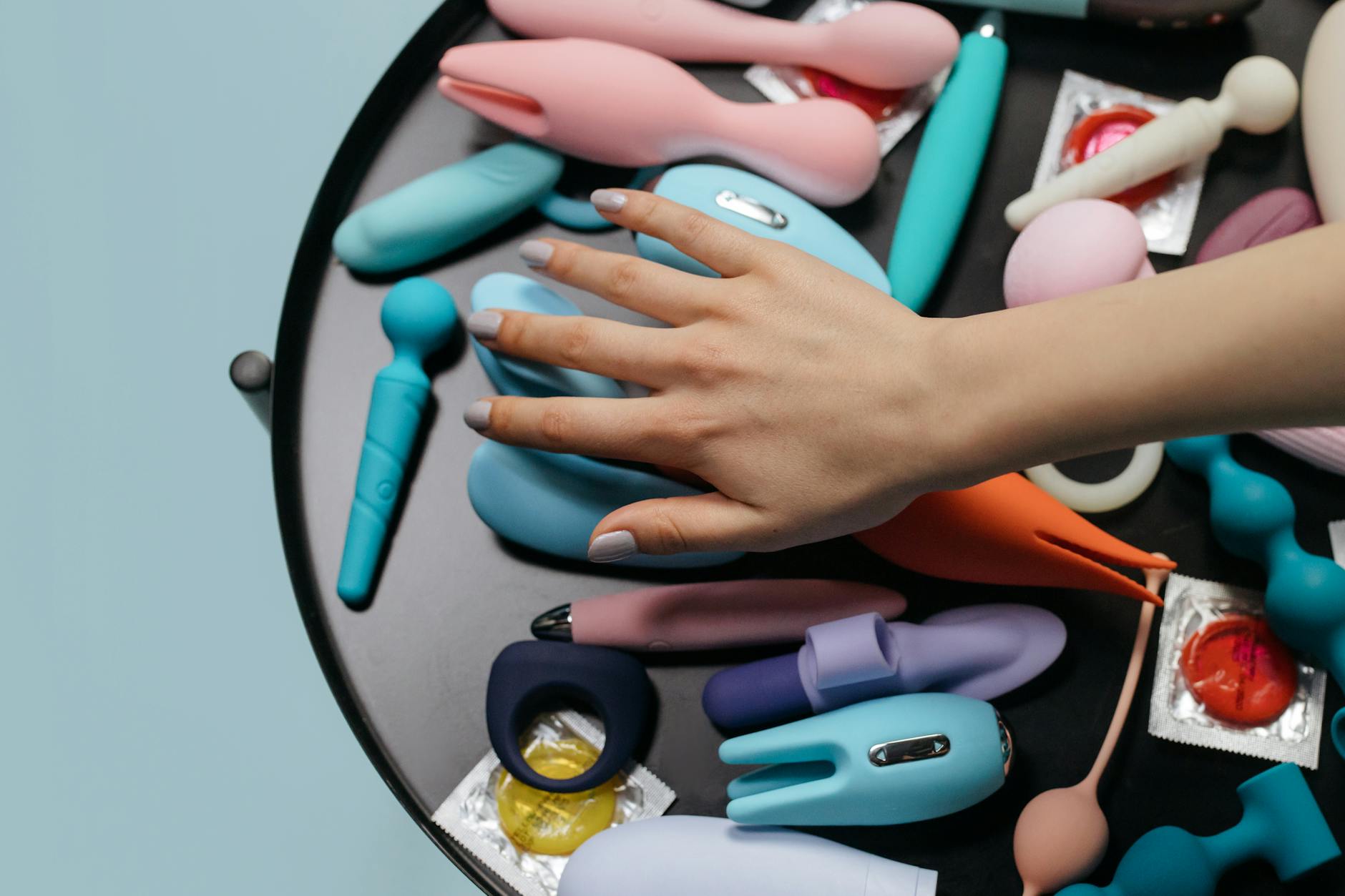
How to Use a Lemon Clitoral Vibrator With a Partner Who Is Hesitant
Your partner worries it will replace them, or that wanting one means something is wrong. Here's how to frame it, introduce it, and use it together without defensiveness.
Your partner is hesitant about toys. Maybe they think a lemon vibrator means you're not satisfied. Maybe they're worried it will replace them. Maybe they just feel weird about the whole thing and can't quite articulate why. Whatever the reason, the hesitation is real, and pushing past it with logic usually backfires.
Here's what I know after years of working with couples: the issue is almost never about the toy itself. It's about what the toy means in your partner's mind, and what they're afraid it says about them, you, or the relationship.
There are three fears that show up again and again, and they're worth naming directly.
Fear one: "If you need a vibrator, I'm not enough." This one comes from a misunderstanding about how bodies work. Your partner might believe that needing additional stimulation is a referendum on their touch, their technique, or their attractiveness. In reality, clitoral vibrators like the lemon sucker work because they apply rhythmic suction at frequencies the human hand can't match. It's not a judgment call on anyone's skills.
Fear two: "This is a sign you're not happy with me." This fear conflates pleasure with satisfaction in the relationship. A partner can be deeply satisfied with their relationship and still want different kinds of sensation. These are not mutually exclusive. But your partner might not believe that until you show them.
Fear three: "I don't know how to fit in when there's a toy involved." This one's about role confusion. If a lemon vibrator enters the bedroom, what's your partner's job now? Are they supposed to use it on you? Watch you? Leave you alone? The vagueness creates anxiety.
All three of these fears have the same antidote: clarity and inclusion. Your partner needs to know exactly what you want, why you want it, and what role they play in the scene.
Don't bring this up during sex or right before sex. Don't bring it up during conflict. Pick a quiet moment when you're both relaxed and clothed. Ideally, you've had good sex recently, so your partner isn't already feeling insecure.
Start with your own desire, not the toy. "I've been thinking about trying something new in bed" is a stronger opener than "I want to get a vibrator." The first sentence centers your curiosity. The second centers an object.
Then get specific about what you want, not what you're missing. "I'm really interested in exploring different kinds of sensation" is honest. "I want stronger orgasms because you can't give them to me" is a door-slam.
Now here's the critical part: invite your partner into the exploration. "I'd love for you to be part of this" or "I want us to figure this out together" tells them that they're not being replaced or sidelined. They're being included in something new.
If your partner asks "Why do you need this?" or "Is something wrong?", don't go into a defensive explanation. Instead, acknowledge the fear. "I get why that might feel that way. That's not what this is about at all. I love what we have. I'm just curious to expand what we do together."
Don't just show up with a toy. Talk about it first. Describe it in a way that emphasizes its design, not its power. "It's a clitoral vibrator that uses suction instead of vibration, which feels completely different" is more informative than "It's super intense."
You can also reframe it as a tool for both of you. "I want to experiment with this so I can show you what feels really good, and then we can find ways to recreate that together." This makes the toy a communication device, not a replacement.
When you do show your partner the actual lemon vibrator, let them hold it. Let them turn it on and feel it. Demystifying the object removes a lot of the anxiety. It's just silicone and electronics. Nothing threatening.
Have a conversation before you start. "I'm thinking I'd like to use this while you're inside me" or "I'd like to use this while we're together, and I want you to watch" or "I want you to use this on me." Be clear about the logistics.
Start slow. Don't jump to pattern 5 on the first night. Begin at pattern 1 or 2. This serves two purposes: it gives your body time to adjust, and it shows your partner that this isn't about getting off as fast as possible. It's about presence and sensation.
If you're using the lemon sucker during penetrative sex, communication is everything. Tell your partner what you're feeling. "This feels incredible" or "That angle doesn't work" keeps you both connected and prevents your partner from spiraling into insecurity.
Here's what happens next: you need to talk about it, but not immediately. Wait until you're both rested and content. Then ask your partner what they thought. Listen for what they say, but also listen for what they don't say.
If your partner felt left out, you know for next time. Maybe they need to hold the vibrator, or you need to maintain more eye contact, or you need to ask them for input on patterns.
If your partner felt relieved (because you finally orgasmed, or because they understood what you need), lean into that relief. Say it out loud: "I'm so glad we did this. I feel closer to you, not further away."
Some partners come around slowly. If your partner is still nervous after the first time, that's normal. You're asking them to unwind years of cultural messaging that says toys are replacements for partners, or that needing different sensation is a sign of a broken relationship.
You might benefit from reading something together, or watching something that normalizes lemon vibrators and clitoral vibrators in partnered sex. But mostly, your partner needs to see over time that using a toy with them hasn't changed your desire for them, your pleasure in their touch, or your commitment to the relationship.
One client I worked with had her partner watch her use the lemon vibrator alone first, outside of partnered sex. This gave him permission to observe without the pressure of performing or the fear that he was being replaced. After a few times, he asked to try using it on her. The hesitation dissolved once he saw how much pleasure it gave her, and felt the power of being the one creating that pleasure.
Your partner might also feel more comfortable if you frame lemon clitoral vibrators as something you explore together, not something you do to yourself in secret. The secrecy is what creates stories in their head. Transparency kills the narrative.
Here's the deepest part of this. A toy isn't a threat to your relationship unless you treat it like a substitute for intimacy. If you use it as a way to include your partner, to communicate what you need, and to explore together, it becomes a tool for connection.
That's the frame that changes everything. You're not bringing in a lemon vibrator because you're unsatisfied. You're bringing it in because you want to know your own pleasure more deeply, and you want your partner to be part of that journey.
When your partner understands that, the hesitation usually shifts. They go from feeling threatened to feeling included in something vulnerable and intimate. That's actually the opposite of replacement. That's deepening.
The lemon clitoral vibrator, or any toy, is just a vehicle for that conversation. It's not the point. The point is knowing what you want, asking for it clearly, and inviting your partner into the exploration. Everything else follows from that.
Technically, yes. Practically? I don't recommend it. Secrecy around sexual exploration usually creates distance, not intimacy. Your partner will either notice the toy, or notice a change in you, and then they'll create a story about what it means that's probably worse than the truth. Openness is riskier in the moment, but it's safer for the relationship long term.
That's their boundary, and it's worth respecting. But also worth understanding. Ask them what specifically they're uncomfortable with. Is it toys in general? Is it a lemon sucker specifically? Is it the symbolism? Different answers lead to different conversations. Sometimes a partner will say no to partnered exploration but yes to you using it alone. Sometimes they need time. Don't treat "not yet" as "never."
A secure partner will see a woman who knows what she wants and asks for it. That's attractive. An insecure partner might spiral temporarily, but that's a sign they need support in working through their own stuff, not a reason for you to hide your sexuality. You can't shrink yourself small enough to make someone else's insecurity disappear. You can only invite them into your world and hope they're willing to grow.
Pay attention to what they're not saying. Are they making jokes? Are they less affectionate afterward? Are they avoiding the topic? These are signs they're uncomfortable. The kindest thing you can do is name it. "I get the sense this might not have felt great. I want to talk about it if you're willing." You're giving them permission to be honest.
A dead bedroom is usually about emotional distance, not physical tools. A vibrator can revive sensation and curiosity, which sometimes opens the door to reconnection. But if your partner is completely withdrawn or your relationship has deeper issues, a toy is a band-aid, not a cure. You might also want to explore what how lemon vibrators help partners reconnect after loss of desire together.
You're allowed to feel awkward. That's information. Ask yourself what the awkwardness is about. Are you worried they're not enjoying you? Are you comparing yourself? Are you just not used to seeing them prioritize their own pleasure? Once you know the root, you can address it. Often, watching your partner take what they need is incredibly hot once you get past the initial weirdness.
However often it feels good. There's no prescription. Some couples use it every time they have sex. Some use it once a month. Some use it for a while and then take a break. The key is that it's something you both want in that moment, not something you're doing out of obligation or routine. When it becomes another chore, it's time to reassess.
Your hesitant partner is not the problem. The lack of conversation is. Once you crack that open, everything else is negotiable. You might discover your partner is way more into the lemon sucker than you expected. Or you might find a compromise that works better for both of you. Either way, you'll have moved from a place of fear and assumption into a place of clarity and collaboration. That's where real intimacy lives.
If navigating the emotional side of introducing toys or expanding your sexual connection feels stuck, reach out to The Lem Shop. We're here to help couples talk about pleasure.