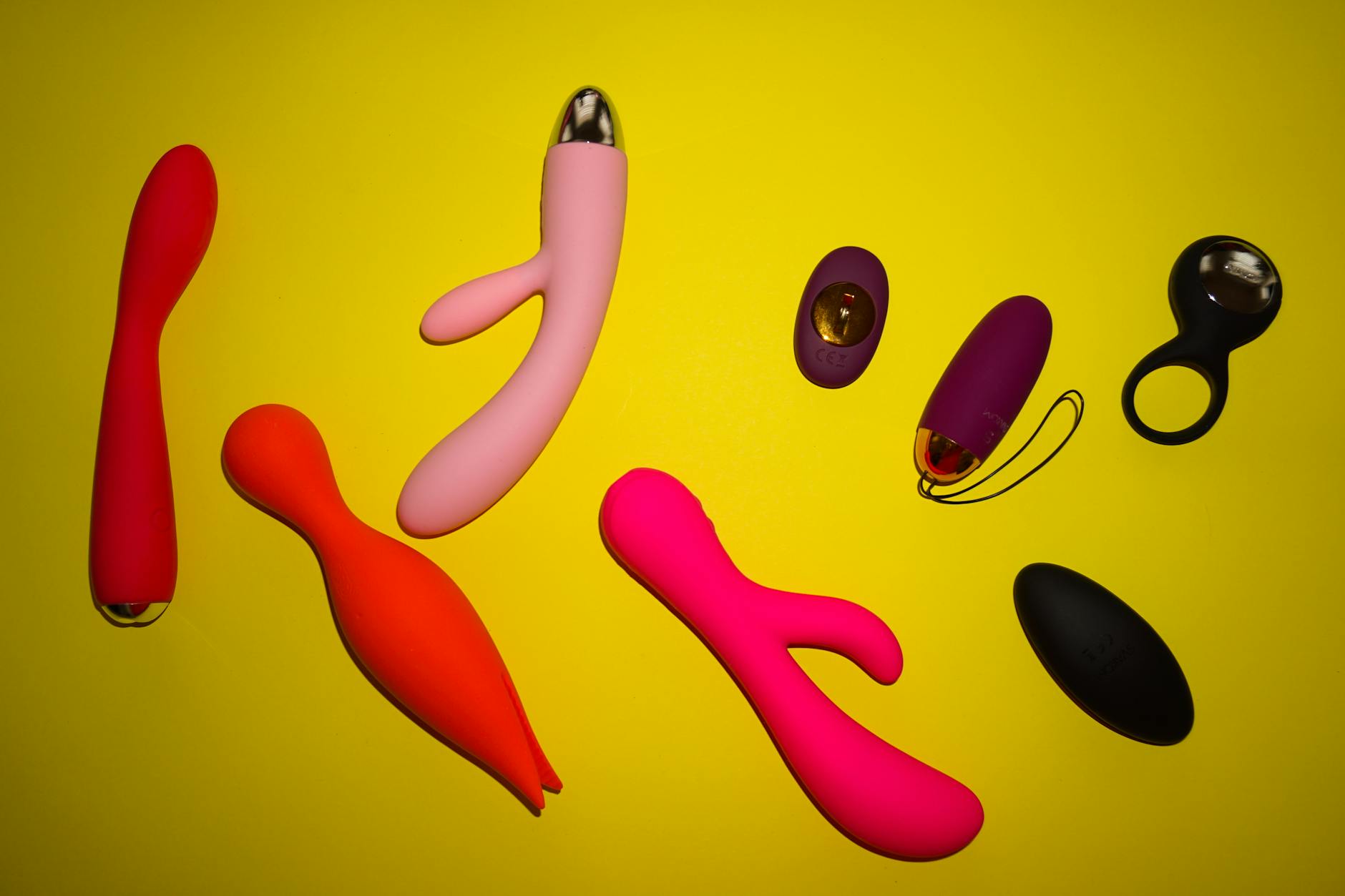
Why Lemon Vibrators Work Better for Anxiety and Tension Relief
Suction-based stimulation triggers your nervous system to actually calm down. Here's what happens in your body and how to use lemon clitoral vibrators as a genuine stress-management tool.
Let's start with what nobody talks about at the dinner table: your body holds stress as physical tension. Your shoulders tighten, your jaw clenches, your pelvic floor grips. And one of the fastest ways to release that tension is through targeted pleasure.
But not all pleasure tools work the same way for anxiety relief. Lemon clitoral vibrators, with their unique suction-based stimulation, actually trigger your parasympathetic nervous system in a way that friction vibrators don't. That means your lemon sexual toys aren't just feeling good in the moment. They're genuinely changing your nervous system's state.
This is backed by neuroscience, and it's worth understanding.
When you're anxious, your sympathetic nervous system is running the show. That's your fight-or-flight response. Cortisol and adrenaline are high. Your muscles are braced for danger. Your breathing gets shallow. You're in a chronic state of alertness.
The parasympathetic nervous system is the opposite. It's your rest-and-digest mode. It kicks in when you feel safe. Your heart rate drops. Your breathing slows and deepens. Your muscles relax. Your body actually repairs itself and processes emotions.
The problem with chronic stress is that your sympathetic system stays activated. You're stuck in the fight response even when there's no actual threat. That's where touch, pleasure, and physical release come in.
Orgasm, in particular, is one of the most reliable ways to flip that switch from sympathetic to parasympathetic. Your nervous system literally cannot stay in fight-or-flight during climax. The relaxation response is involuntary.
Here's the part that separates lemon adult toys from traditional vibrators when it comes to anxiety relief.
Traditional vibrators work through rapid oscillation. They're fast, rhythmic, and they require your body to keep pace with that intensity. Your nervous system is actually tracking the rhythm, which can feel stimulating but also slightly agitated.
Lem vibrators use suction. The sensation is gentler at first, then builds gradually. It's more about pressure and pulsing rhythm than raw speed. That slower build actually matters for anxiety management because it allows your breathing and your arousal to deepen together.
When you use a lemon clitoral vibrator correctly for anxiety relief, you're not chasing fast orgasms. You're creating a slow, deepening state of arousal that naturally lowers your cortisol. The suction sensation has been shown in small studies to activate the vagus nerve more directly than vibration alone. Your vagus nerve is basically the main switch for your parasympathetic system.
In practical terms: a lem vibrator creates conditions where your body naturally wants to relax, breathe, and let go. That's the opposite of most anxiety states.
Here's something I notice constantly with clients using lemon sexual toys for stress management: their breathing completely changes.
When you're anxious, you breathe shallowly into your chest. Your exhale is short. Your nervous system reads that as a threat signal and tightens further. It's a closed loop.
When you're using a lemon clitoral vibrator slowly and intentionally, you naturally start breathing more deeply. You inhale into your belly. Your exhales get longer. That shift in breathing is literally communicating safety to your nervous system.
I tell my couples this all the time: if you want to use lemon vibrators for genuine tension relief, don't aim for fast orgasm. Use patterns 1 or 2 on the Lem. Spend 20 to 30 minutes building arousal. Focus on your breath. Notice where you hold tension (shoulders, jaw, pelvic floor) and consciously soften those spaces on the exhale.
That's not sex. That's meditation with pleasure layered in.
Anxiety lives in your body. For many people, it specifically lives in the pelvic floor.
Your pelvic floor is a group of muscles at the base of your pelvis that support your organs and control your bladder and bowel. It's also incredibly dense with nerve endings. When you're chronically stressed, these muscles stay partially contracted. You might not even notice it consciously, but it's there.
That tension creates a feedback loop. Tight pelvic floor means your nervous system thinks you're in danger. Your nervous system stays activated. The muscles tighten more.
Lemon clitoral vibrators break that loop because the suction and pulsing sensations naturally draw blood and attention to the pelvic floor. As arousal builds, you learn to consciously relax those muscles. An orgasm, particularly with a lem vibrator, creates a massive release of that tension. Your pelvic floor literally contracts and then releases.
I've had clients with severe anxiety tell me that the single most helpful thing they've done is use a lemon vibrator for 20 minutes in the evening, focusing entirely on relaxing their pelvic floor. Not for the orgasm. For the nervous system reset.
If you're interested in trying this, here's the framework that works.
Set the space first. This isn't a rushed thing. You need at least 20 minutes with zero interruptions. Dim the lights. Temperature matters too. A cool room helps because anxiety makes you feel overheated.
Start external, go slow. Use a water-based lube (always with lemon sexual toys). Begin at the lowest setting on your Lem. Many people start with the suction itself off, just using the gentle vibration patterns to warm up.
Focus on your breath, not the sensation. This is the opposite of how we usually think about using toys. You're not chasing intensity. You're actually using the vibration as an anchor for your breath. Inhale for four counts, exhale for six. Let the pleasure deepen your breathing, not the other way around.
Don't force orgasm. This is crucial. If you're using a lemon clitoral vibrator specifically for anxiety relief, you might not even reach climax, and that's completely fine. The nervous system shift happens during the arousal buildup. Orgasm is a bonus, not the goal.
Notice what releases. You might cry. You might feel emotion come up. That's your nervous system finally letting go of something. Breathe through it. This is the work.
I want to be clear about what I'm saying and what I'm not saying.
I'm not saying lemon adult toys replace therapy or medication. If you have clinical anxiety, you need professional support.
But I am saying that using lemon clitoral vibrators regularly can be a legitimate part of a broader anxiety management toolkit. It's not replacing anything. It's complementing.
What makes it different from medication is that you're teaching your nervous system something. Every time you use a lemon vibrator mindfully for stress relief, you're essentially training your body that pleasure equals safety. That arousal and deep breathing go together. That tension can be released.
That's neuroplasticity. You're rewiring.
Medication quiets the alarm bell. Lem vibrators teach your alarm bell that most of the sirens are false. Both are valuable.
Here's where I see real transformation in my practice.
When a partner learns that their person uses lemon sexual toys for anxiety management, something shifts. It stops being a solo pleasure thing and becomes an act of self-care that the relationship supports.
I've had couples come in where one partner would set aside time in the evening to give their partner space with their Lem vibrator. They'd make tea. They'd handle the kids. They'd create the calm space. No pressure. No expectation of shared sex after. Just support for nervous system regulation.
That shift is profound. Pleasure becomes something the relationship actively values as health maintenance, not as entertainment.
You don't have to involve a partner for this to work. But if you do, the conversation is simple: "I've found that using a lemon clitoral vibrator helps my anxiety. I'd love to do this regularly. Would you be willing to give me space for that?"
Most partners say yes immediately once they understand it's self-care.
No direct cortisol studies exist on lemon vibrators specifically, but research on sexual pleasure and the parasympathetic nervous system is solid. Orgasm reliably lowers cortisol. Lemon clitoral vibrators create conditions for easier, more sustained arousal, which means more accessible relaxation. You're not getting a pharmaceutical cortisol drop. You're getting a nervous system reset that's measurable in heart rate, blood pressure, and how you feel.
There's no magic frequency. Some people find once a week is transformative. Others do it three or four times weekly. The key is consistency and intention, not quantity. If you're using a lem vibrator every day trying to chase anxiety relief, you might be bypassing the actual work of managing stress sources. If you're using it mindfully once a week, you're reinforcing a pattern of nervous system regulation. Start with twice weekly and adjust from there.
Completely. In fact, solo use is often more effective for anxiety management because there's zero performance pressure. You're not thinking about your partner's experience or timing. You're purely focused on your own nervous system and breath. This is actually where I see the deepest work happen.
That's fine and actually common. The benefits happen during arousal, not just at climax. If you're breathing deeply and relaxing your pelvic floor for 20 minutes with a lemon clitoral vibrator, your nervous system has been reset. Orgasm would be nice, but it's not required for the benefits to happen. Release the expectation and the pleasure often follows.
Not in the way people worry about. You're not becoming addicted to the vibrator. You're conditioning your body to recognize that pleasure and safety go together. That's actually a healthy association. The risk is only if you're using it to avoid addressing actual stress sources. If your job is destroying your mental health, no amount of lemon sexual toys fixes that. They're a support tool, not a replacement for solving problems.
Yes, but pleasure sensitivity might change. Many medications affect sexual response. That doesn't mean lemon clitoral vibrators won't help with anxiety. You might need to adjust settings or timing. I always recommend talking to your prescriber about sexual response changes, and if pleasure feels muted, a lem vibrator's gentler suction can sometimes feel more accessible than traditional vibration. Start at the lowest setting and give yourself permission to explore slowly.
What I want you to understand is that your body doesn't separate pleasure from healing. They're the same system.
When you're using lemon clitoral vibrators with intention for anxiety relief, you're engaging the same biology that makes orgasm feel transcendent. You're working with your parasympathetic nervous system, your breathing, your pelvic floor, and your vagus nerve.
That's not frivolous. That's medicine.
The fact that it feels good is the point, not a side effect. Your nervous system recognizes pleasure as safety. It lowers your guard. It lets go of tension. It breathes.
If you're managing anxiety and you haven't tried this, you're missing a tool that's accessible, private, and actually backed by the science of how your nervous system works. Lemon sexual toys aren't a replacement for therapy or medication, but they're a powerful part of the toolkit.
Your body knows how to relax. Sometimes it just needs a little lemon.
Komisaruk, B. R., & Whipple, B. (2005). Functional MRI of the brain during orgasm in women with complete spinal cord injury. Progress in Brain Research, 152, 127-139.
Porges, S. W. (2011). The Polyvagal Theory: Neurophysiological foundations of emotions, attachment, communication, and self-regulation. W.W. Norton & Company.
Rubio-Casillas, A., & Rodríguez-Casares, A. F. (2016). The female prostate and orgasm. Clinics (São Paulo, Brazil), 71(11), 615-625.
Navarro-Cremades, F. (2013). Sexual response cycle in women and men. Medicina Clínica, 141(9), 395-401.