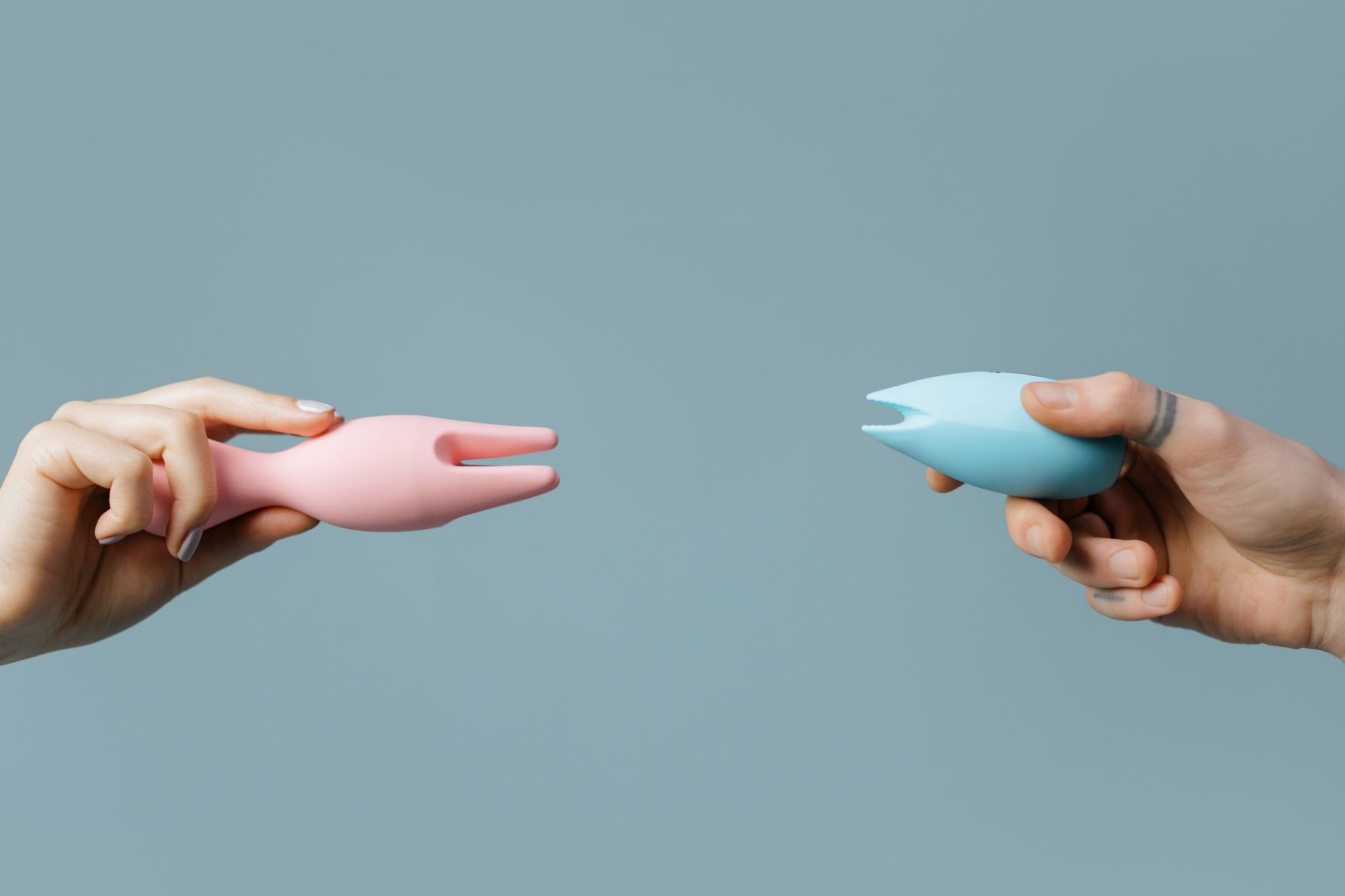
Why Lemon Vibrators Feel Different With a Hormonal IUD
Your body isn't broken. A hormonal IUD changes arousal timing, clitoral sensitivity, and sensation peaks. Here's what's really happening and why the right tool makes all the difference.
You got a hormonal IUD. Your pleasure changed. Now you're wondering if something broke, if the spark is actually gone, or if your body just permanently switched modes. Here's what I tell every client in this situation: your body didn't malfunction. Your neurochemistry shifted, and that changes everything about how sensation works.
Hormonal IUDs release a steady, low dose of the hormone levonorgestrel directly into your system. It's designed to thin the uterine lining and suppress ovulation locally. What nobody mentions in the clinical conversation is how this affects the clitoral nerve pathways, arousal ramp-up speed, and the actual texture of how orgasms feel. Understanding this is the difference between thinking something's wrong with you and knowing exactly how to work with your body as it is now.
First, the science. Hormonal IUDs suppress estrogen more locally than systemic birth control, but they do affect circulating hormones. Testosterone drops. So does estrogen variability. This matters because your clitoris is rich with hormone receptors, particularly for testosterone and estrogen. Less hormone fluctuation means less of the natural sensitivity peaks and valleys you might have experienced on other contraception or off hormones entirely.
Second, arousal speed. Off hormones or on non-hormonal methods, sexual arousal can build in 5 to 15 minutes if conditions are right. With a hormonal IUD, that window often stretches to 20 to 40 minutes. This isn't a problem. It's just different. Many of my clients find that the slower build actually allows for deeper mental engagement and less distraction along the way.
Third, the texture of sensation itself. Clitoral tissue becomes slightly less engorged when hormones drop. This changes how pressure feels. What used to feel good at intensity level 8 might feel sharp or even uncomfortable. What used to require sustained rhythm might now feel better with pattern variation or lower pressure. This is why lemon clitoral vibrators often feel dramatically better than traditional vibrators for people using a hormonal IUD. Suction-based stimulation doesn't rely on the tissue firmness that hormonal suppression reduces. It creates sensation through gentle pressure change instead.
A traditional vibrator works through rapid oscillation, usually between 2,000 and 10,000 cycles per minute depending on the model. This requires healthy clitoral engorgement and responsive tissue tension to feel good. When hormones are lower and tissue is slightly less firm, that kind of friction-based stimulation can feel inconsistent or even mildly painful.
A lemon vibrator uses air-suction technology. It creates a gentle pressure wave around the clitoral area instead of vibrating against it directly. This approach works brilliantly with hormonal IUD bodies because it doesn't depend on tissue firmness. It's creating stimulus through pressure change, not through tissue contact quality. Many users report that their most intense sensations on a lemon vibrator happen after a hormonal IUD switch, not before.
The patterns matter too. With reduced hormone-driven sensitivity, you might find that steady pulse patterns feel more satisfying than rapid-pulse patterns. Lemon vibrators typically offer both slow and fast pattern options, which gives you the flexibility to discover what your hormonal IUD body actually prefers rather than defaulting to what worked before.
Here's a detail that changes everything for partnered pleasure: arousal takes longer, but it also sustains longer. The old 5-minute warm-up might no longer work. The new 30-minute foreplay window might feel ridiculous if you're not expecting it. The key is reframing this as expansion, not loss.
Building arousal intentionally creates space for what's called receptive pleasure. Instead of waiting for spontaneous desire and then responding, you're actively creating the conditions for it. This is where partners sometimes struggle. If they think quicker arousal is the goal, the slower timeline feels like rejection. If you both understand it as a shift in how your body works now, it becomes collaborative.
Start expansion earlier in your time together. Instead of beginning touch when you're already aroused, start 20 to 30 minutes before you want penetration or external play. Let your nervous system warm up slowly. A lemon clitoral vibrator can be introduced at any point in this arc. Many people find that using it during the arousal-building phase, rather than waiting until high arousal, creates a completely different sensation profile. The pressure builds on an already-engaged-but-not-yet-peaked body.
Some people report that with a hormonal IUD, clitoral sensation becomes noticeably flatter. This is less common than the arousal-timeline shift, but it happens, and it's worth addressing.
If numbness is your experience, check three things first:
One, you might need more time. Hormonal IUDs take 3 to 6 months to fully settle in your system. Sensation can continue to shift downward in that window, then stabilize. Some people find that by month four or five, sensitivity rebounds slightly as their body adjusts.
Two, arousal actually needs to happen first. Without adequate arousal buildup, the clitoris stays relatively dormant. With a shorter arousal window, you might be trying to use a vibrator on tissue that isn't actually ready yet. Extend the foreplay, change the context, or try different stimulation in the lead-up.
Three, you might need different patterns or lower intensity. Start at pattern 1 or 2 on your lemon vibrator instead of jumping to level 5. Let sensation build. A lower-intensity suction pattern often feels more generative than a higher one when tissue sensitivity is reduced.
If after six months sensation genuinely hasn't returned, talk to your provider about whether the IUD is right for you. Some bodies tolerate hormonal IUDs beautifully. Others experience persistent sensation loss that doesn't resolve. Neither outcome is a failure. It's information.
If you're in a partnership, this transition matters relationally as much as physically. Partners who were accustomed to quicker arousal, easier orgasm, or consistent sensation patterns sometimes interpret the shift as a sign of lost attraction to them. It's not. It's your hormones, not your feelings.
The conversation to have is specific and simple. "My body is working differently on the IUD. Arousal is slower, and sensation feels a bit different. Let's figure out what works now instead of trying to recreate what worked before." This reframes the whole thing from "something's wrong" to "we're adapting."
Experimentation becomes collaborative. You're both learning your body's new geography. A lemon clitoral vibrator can be part of that exploration rather than a workaround. Many couples find that the slower arousal window actually creates deeper foreplay and more present connection, not less.
How long does it take to feel normal sensation again after a hormonal IUD insertion?
Sensation shifts usually stabilize between 3 and 6 months as your body adjusts to consistent hormone levels. Some people notice a slight rebound in sensitivity around month five or six. Others find their new baseline feels different but equally pleasurable once they adjust their technique. If muted sensation persists beyond 6 months, that's worth discussing with your gynecologist.
Can a lemon clitoral vibrator help if I feel completely numb?
Lemon vibrators can help, but numbness often means your body isn't in arousal yet rather than there being a problem with the vibrator itself. The suction approach is gentler and can help wake up sensation that friction-based vibration misses. Start with extended foreplay, use the vibrator on patterns 1 or 2, and give yourself permission for arousal to take 30 to 45 minutes instead of 10. If sensation remains flat beyond 6 months, the IUD might not be the right fit for your body.
Does orgasm feel the same with a hormonal IUD?
Often it feels different but not worse. Some people report less intense but more diffuse orgasms. Others describe them as more focused in one area rather than full-body. The variability depends on your individual neurology and hormone sensitivity. Many clients tell me their most satisfying orgasms happen after their body fully adjusts to the IUD, especially when they've given themselves permission to slow down.
Is it normal to need a stronger vibrator after an IUD?
Not necessarily. Many people find they actually prefer lower-intensity, pattern-based stimulation after hormonal changes. A lemon clitoral vibrator operates at a different frequency than traditional vibrators, so "stronger" isn't the solution. Different works better. Experiment with all available patterns before deciding you need something more intense.
Can hormonal IUDs affect arousal with partners too, or just solo pleasure?
Both. Partnered arousal usually changes in the same way solo arousal does, which is why communication matters so much. The slower timeline and sensation shift affect all pathways, not just toy-based pleasure. The upside is that once you both understand the shift, you can design better foreplay and more attuned partnered experiences together.
Should I tell my partner about the IUD affecting my sensation?
Yes. The alternative is letting them believe arousal is slower because they're less attractive to you, which corrodes intimacy unnecessarily. Most partners respond well to specific, matter-of-fact information. "The hormonal IUD changes how arousal builds. I need more time and a different kind of touch now." This isn't a complaint about them. It's information that actually improves sex.
A hormonal IUD changes how your body responds to pleasure. That's not a flaw in you. That's your body adapting to a consistent hormone environment. The right tools, the right timeline, and honest communication with yourself and any partners transform this from a loss into a recalibration. Most of my clients find their pleasure deepens once they stop fighting the shift and start working with it. Your body didn't break. It just told you it needs something different now. Listen to it.