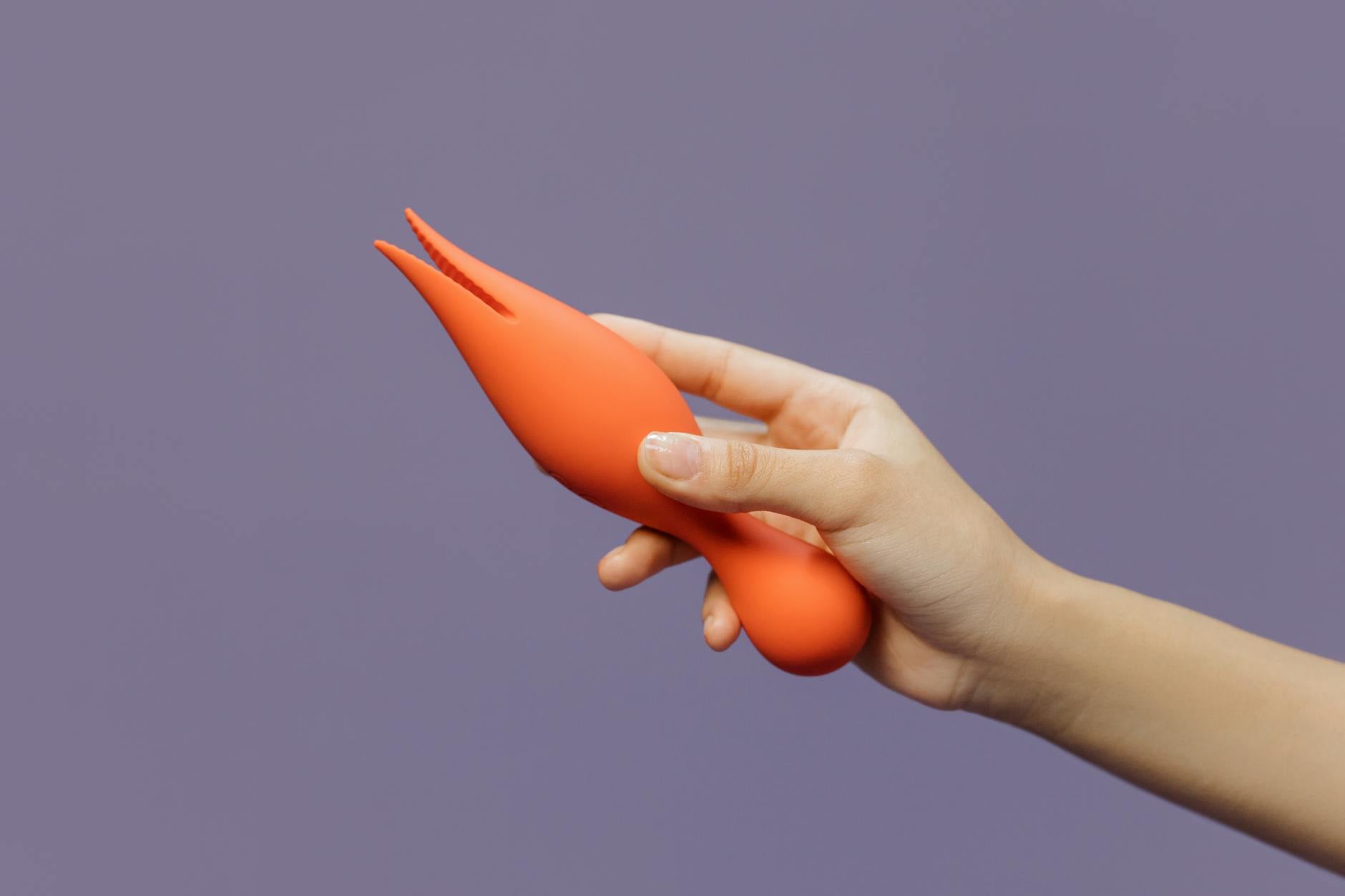
Why Lemon Vibrators Feel Better Than Traditional Vibrators for Sensitive Tissue
The difference between buzzing and suction. Why lemon clitoral vibrators work better for tender, reactive tissue and how the mechanics actually change the experience.
Let's be real. Traditional vibrators buzz. They vibrate at a set frequency and apply that vibration directly to tissue through sustained contact and oscillation. Lemon clitoral vibrators do something entirely different. They use suction and gentle pulsing to stimulate nerves without the same mechanical friction. If your body is sensitive, irritated, or recovering from anything, this distinction changes everything.
I work with couples navigating physical transitions all the time. Someone gets injured, medication changes their sensitivity, or hormones shift. The default assumption is that all vibrators work the same way. They absolutely do not. And once you understand why, you'll understand why a lemon sucker vibrator often feels like the solution when traditional lemon adult toys feel like too much.
Traditional vibrators create stimulation through rapid, repetitive contact. The toy oscillates (typically 5,000 to 11,000 Hz depending on the model) against the clitoris. This creates a buzzing sensation that many people love. But here's what's happening mechanically: every single oscillation is a tiny movement against tissue. If that tissue is thin, inflamed, recovering, or naturally hypersensitive, those thousands of tiny impacts per second can feel overwhelming or even painful.
This is especially true for anyone with conditions like vulvodynia, vaginismus, or generalized sensitivity. The clitoris has roughly 8,000 nerve endings in a space the size of a pea. When tissue is reactive, those nerve endings are already firing hard. Adding vibration on top of that can overstimulate the nervous system rather than pleasurably activate it.
Lemon vibrators operate on a completely different principle. They use gentle suction to create a seal around the clitoris, then pulse that suction in rhythmic waves. Instead of friction or direct oscillation, you're getting rhythmic pressure changes. The nerves respond to the pattern of suction release and re-engagement, not to mechanical vibration.
This matters because suction stimulates different nerve fibers than vibration does. It's a broader, more diffuse sensation that doesn't concentrate impact on a single point. The tissue itself isn't being bombarded by thousands of micro-collisions. Instead, it's experiencing rhythmic waves of pressure. For sensitive bodies, this is often profoundly gentler while still being highly stimulating.
Three specific reasons why lemon clitoral vibrators work better for reactive bodies:
1. Pressure without friction. Suction creates stimulation through pressure change, not through the vibrator rubbing against tissue. If your clitoris is sore, post-surgical, or dealing with any kind of inflammation, friction is the enemy. Pressure change is tolerable.
2. Broader nerve activation. The suction pattern activates a wider area of nerve tissue rather than concentrating all sensation on the central clitoral head. This distributes pleasure across more nerve endings, which feels less intense even though it can be just as satisfying.
3. Lower overall intensity at baseline. Even the lowest setting on a lemon sucker vibrator is gentler in character than the lowest setting on a traditional vibrator. You can start smaller and build up gradually. For people rebuilding sensitivity or managing pain, this graduated approach is essential.
I've had countless clients report that they tried three or four traditional vibrators before discovering lemon vibrators, and suddenly pleasure became accessible again. That's not coincidence. It's physics.
When you use a traditional vibrator on sensitive tissue, arousal tends to plateau quickly or becomes uncomfortable. The intensity is front-loaded. You feel the buzz immediately and intensely. Your body either responds within a few minutes or it doesn't. There's not much middle ground.
With a lemon clitoral vibrator, arousal typically builds more gradually and sustained. The suction sensation allows for longer sessions without fatigue or overstimulation. You can spend 20 or 30 minutes with it, gradually increasing intensity, letting your nervous system adjust and respond. Many people find that their strongest orgasms come from this slower build, not from immediate high intensity.
This is also why lemon vibrators are often recommended for anyone rebuilding sensitivity after long-term traditional vibrator use or after certain medications. The gentler stimulation allows nerve endings to recover their responsiveness without shock.
If any of these apply to you, lemon clitoral vibrators are worth trying.
People with naturally sensitive tissue or a heightened gag reflex in the nervous system (small t trauma responses, anxiety, ADHD sensory sensitivity). Anyone dealing with vulvodynia, vaginismus, or provoked vestibulodynia. Anyone in recovery from pelvic floor surgery or injury. People whose sensitivity has changed due to hormonal shifts, medication, or illness. Partners who want to explore pleasure together but have mismatched sensitivity levels. Anyone who's tried traditional vibrators and found them either too intense or ineffective.
You don't need to have a problem or a diagnosis to benefit. Some people simply prefer the sensation. Their nervous system responds better to suction than to vibration. That's completely valid and increasingly common.
One thing that trips people up: they switch from a traditional vibrator to a lemon suction vibrator and still use it the wrong way. The seal is crucial. If the seal isn't complete, you lose the suction effect and end up with basically a tiny vibrator. Spend the first session or two just getting the seal right. It should feel snug but not painful.
Starting at the lowest setting is not optional if your tissue is sensitive. I know there's an urge to jump to higher patterns, but give your body time to experience what suction actually feels like. Many people find that patterns 2 or 3 on a lemon vibrator are more satisfying than patterns 5 or 6, once they've adjusted.
I'm not saying lemon clitoral vibrators are better for everyone. Some people prefer the buzzing sensation. Some people have tissue that thrives on direct vibration. Some people like to alternate between both types depending on mood or cycle phase. That's all fine. The point is knowing you have options and understanding what each one actually does.
If you've only used traditional vibrators and assume all toys are too intense, too numb-inducing, or not your thing, try a lemon suction vibrator before you give up. The sensation is genuinely different. Your body might surprise you.
Desensitization from repeated use is less common with suction-based lemon clitoral vibrators, partly because the stimulation pattern is different and partly because most people use them less intensely. That said, any toy used for hours every day can contribute to reduced sensitivity over time. Moderate use (a few times a week) with breaks rarely causes problems. If you notice decreasing responsiveness, taking a week or two off typically restores it.
Yes, absolutely. It's a completely different sensation. Some people find it instantly better. Others need 3-4 sessions to adjust and appreciate it. Give yourself permission to not love it immediately. Your nervous system is just learning a new kind of pleasure. That adjustment period is normal and doesn't mean it's wrong for you.
Not necessarily. A lemon suction vibrator can build to intense, full-body orgasms. The intensity is different in character, not necessarily lower in power. Early patterns feel gentler. Later patterns can be quite strong. The difference is how that intensity is delivered to your tissue.
Often yes, because the suction seal means the vibrator isn't directly contacting the most sensitive point. The clitoris sits inside the suction cup, and stimulation comes from pressure waves rather than direct friction. For people whose clitoris is too sensitive for fingertips or direct toy contact, this can be game-changing.
Not typically. The seal is self-contained, so there's no friction requiring lube. If you want to use lube for comfort or to enhance sensation, water-based works fine. It won't damage the toy and some people prefer the glide feeling. It's optional rather than essential.
Lemon clitoral vibrators like the Lem are often in a similar price range as mid-to-premium traditional vibrators. They're not budget toys, but neither are high-quality traditional vibrators. Think of it as an investment in better sensation that actually works for your body, rather than a generic option that might not.
Your body isn't broken if traditional vibrators don't work for you. You might just need a different type of stimulation. Lemon vibrators aren't trendy or gimmicky. They're based on solid biomechanics: suction stimulates tissue differently than vibration does, and for many people, especially those with sensitive bodies, that difference is transformative.
If you've been struggling with pleasure, pain, or numbness, understanding how different toys actually work gives you real choices. You might find that a lemon clitoral vibrator is exactly what you've been searching for. Your nervous system deserves tools that work with your body, not against it.
Want to explore this further or talk through what might work for your body? Reach out to us. We're here to help you figure out what actually works.