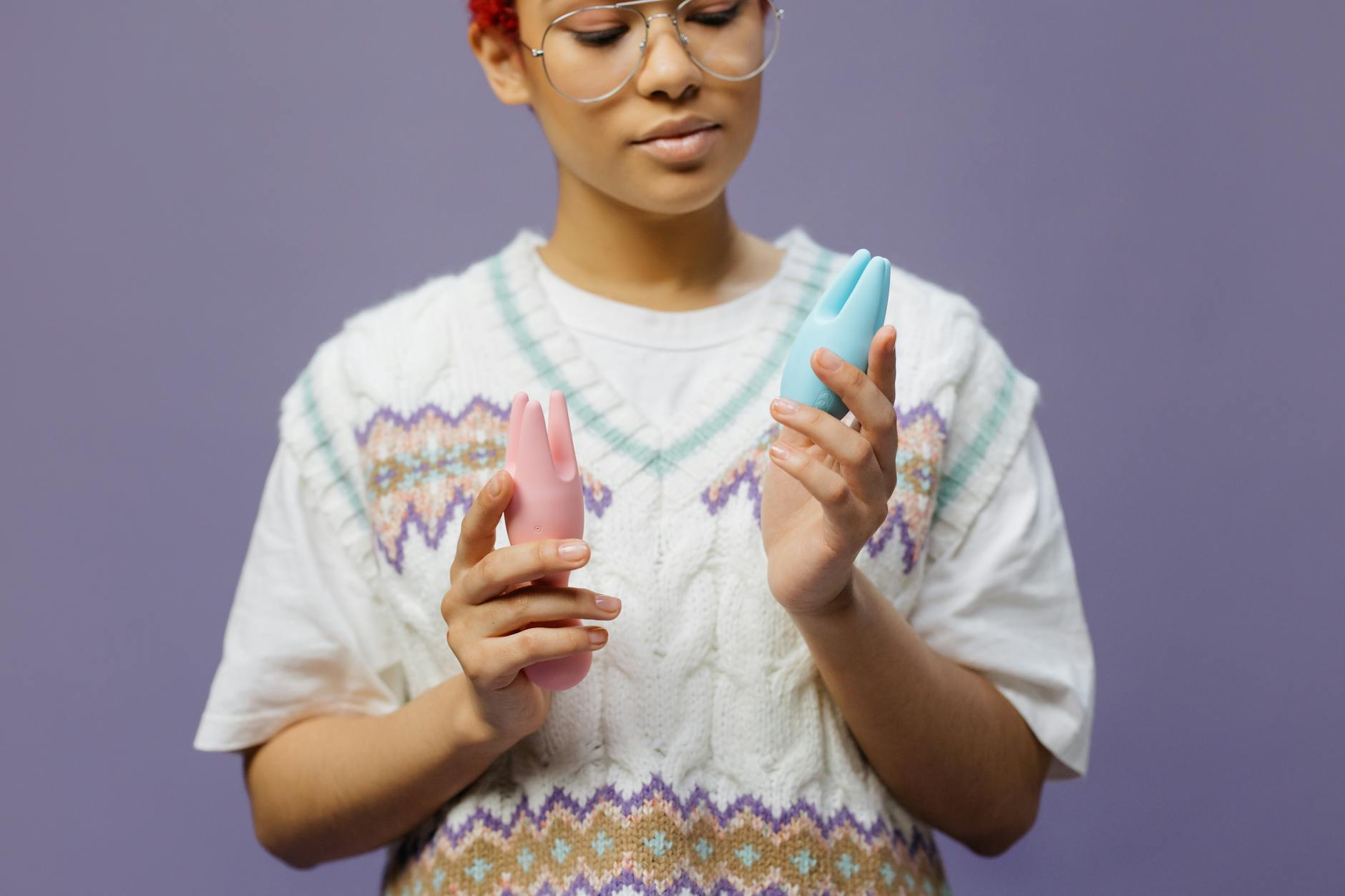
Do Lemon Vibrators Help With Stress and Emotional Release Between Partners
How shared pleasure with a lemon clitoral vibrator becomes a language for what words can't say. A couples therapist on stress, touch, and reconnecting.
Here's what I've learned from twenty years of couples therapy: the moment a relationship stops being tactile is the moment it starts shutting down. Work stress, kid stress, money stress—they all erode the small touches that keep two people woven together. And then disconnection starts whispering its familiar story.
Your nervous system doesn't distinguish between types of stress. A work deadline feels the same neurologically as a conflict at home. Both activate your sympathetic nervous system—the fight-or-flight branch. And both need the parasympathetic nervous system—rest and digest—to help you come back down.
Orgasm is one of the most reliable ways to flip that switch. During climax, your body releases oxytocin (the bonding chemical), dopamine (reward and connection), and serotonin (mood stabilization). Your heart rate spikes and then drops. Your muscles tense and release. Neurologically, it's a reset button.
When that happens with a partner present—or better, participating—something else happens too. You're not just de-stressing. You're also reinforcing the neural pathway that links your partner with safety, pleasure, and being seen. That's not incidental. That's the actual work of staying close through hard seasons.
I want to be clear: there's nothing wrong with solo pleasure. But couples often come to therapy saying "We've stopped touching" and they're usually not talking about intercourse. They're talking about the small, consistent physical contact that signals "you matter to me" and "I think you're sexy."
When you bring a lemon vibrator into that space intentionally—not as a sex toy, but as an object of shared attention—something shifts. One partner might hold the Lem while the other receives. They're making eye contact. There's feedback and adjustment in real time. It requires presence.
I had a couple in their late forties last year, married eighteen years, deep in the fog of work stress and parenting teenagers. She said, "We feel like roommates." He agreed. I suggested they try exploring pleasure together, without the goal of intercourse. They bought a lemon clitoral vibrator. Six weeks later, they reported something simple but crucial: they were touching again. Not just during sex. In the kitchen. On the couch. The Lem hadn't fixed their problems, but it had interrupted the shutdown long enough for them to remember why they'd chosen each other.
First, drop the idea that this is about "improving" sex. That's goal-oriented thinking and it kills the whole thing.
Instead: slow down. Set a time when you're not exhausted. Agree that the goal is simply to be together and explore. Start by using the Lem on lower patterns—usually pattern one or two—and build gradually. If you're new to lemon clitoral vibrators, let that curiosity be the whole point.
One partner can hold the device while the other directs it. Or take turns. The conversation that happens in that space—"does that feel good, try a little higher, I like this pattern"—is intimacy. It's not foreplay to something else. It's the thing itself.
If you're someone with a partner and you're in that numb, disconnected space, you don't need more passion. You need more tenderness and presence. A lemon vibrator gives you permission to slow down and pay attention in a way that everyday life doesn't.
When you're stressed, your body physically closes. Your shoulders rise. Your pelvic floor tenses. Your nervous system primes for threat, not pleasure. Over time, this becomes your default. You stop noticing your partner's body. Touch feels transactional, if it happens at all.
I see this in couples where one or both partners work high-stress jobs. The assumption is always "we'll reconnect when things calm down." But things don't calm down. Life doesn't pause. So the disconnection hardens into resentment, and resentment is the quicksand that relationships disappear into.
Using a lemon suction vibrator with intention—even once a week, even for fifteen minutes—interrupts that spiral. It says, "You're still desirable to me. I'm still present with you. This matters." It's not about the orgasm, although that's nice. It's about the signal you're sending your nervous system and your partner.
One thing I notice with lemon vibrators, specifically: couples describe the experience as curious rather than performative. Maybe because they're still relatively new to mainstream conversation, or maybe because the sensation is genuinely different from what they've tried before. The clitoral vibrator sensation—suction rather than vibration—requires attention. You can't zone out. You have to be present.
That presence is what stress steals. And it's what reconnection requires.
Let's be honest: a lemon clitoral vibrator won't fix a fundamentally broken relationship. If there's infidelity, abuse, or deep incompatibility, a vibrator isn't the answer. But if you're two people who love each other and you've gotten lost in the fog of life, then yes. Small, intentional acts of pleasure can be the thing that helps you find each other again.
If shame or discomfort around pleasure is the issue, that's worth exploring with a therapist who specializes in sex. There's no judgment in that conversation. There's just clarity about what's actually stopping you.
If stress is the issue—and it usually is—then the lemon clitoral vibrator becomes a tool for two things: nervous system regulation and reconnection. Use it that way, not as pressure, and it works.
Stressed couples often don't know how to talk about the disconnection. "We've grown apart" is vague and hopeless. But "I miss touching you" or "I want to feel close again" gives you something to actually do about it.
A lemon vibrator gives you a third object to focus on, which paradoxically makes it easier to focus on each other. You're not staring at each other trying to figure out how to reconnect. You're collaborating on something. That's the actual practice ground for intimacy.
I had another couple, both in high-stress careers, say they started using the Lem during quiet time on a Sunday afternoon. Nothing fancy. Just together. Within a month, they reported that the quality of their conversations improved. They were touching each other more throughout the week. They were laughing again. The vibrator hadn't changed their circumstances. But it had changed their nervous system's association with each other: from stress to safety.