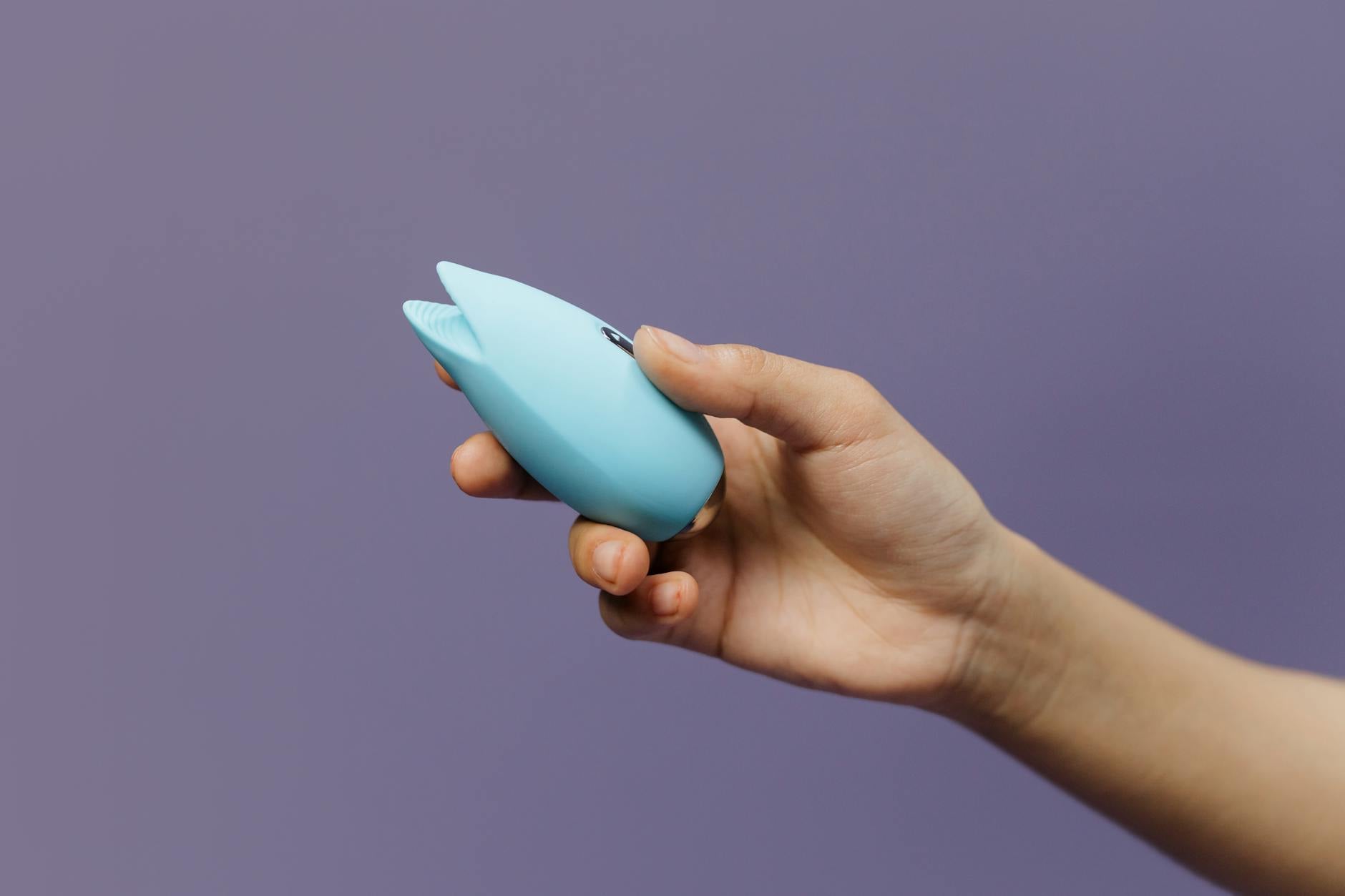
How Lemon Vibrators Rebuild Arousal After Antidepressants
The gap between desire and sensation is real. Here's why lemon clitoral vibrators work where other stimulation doesn't, and how to trust your body again.
Antidepressants save lives. They also frequently flatten sexual response in ways that feel like a cruel trade-off. You want to want your partner. You want to feel pleasure. And for many people on SSRIs or SNRIs, that wanting simply stops happening, or it feels like reaching for something through thick glass.
Serotonin reuptake inhibitors work by keeping serotonin available in your brain longer. This stabilizes mood. It also dampens dopamine signaling in the reward pathways that light up during arousal. The result is blunted desire, slower physical response, and difficulty reaching orgasm.
The numbness isn't psychological. It's neurochemical. Your brain literally isn't getting the same signals.
About 40-60 percent of people on SSRIs experience sexual side effects. Women report lower orgasm intensity or complete anorgasmia. Men report delayed ejaculation or erectile difficulty. The gap between wanting to want and actually wanting can feel enormous. And then there's the guilt layer. You're healthier mentally. Why does it feel like you've lost something essential?
Traditional vibrators rely on speed and vibration intensity to create sensation. If your nervous system is already dampened by medication, that approach often doesn't work. You're chasing sensation that feels muted no matter how high you turn the dial.
Lemon clitoral vibrators like the Lem use suction and pulsation instead. Here's why that distinction matters for medicated bodies.
Suction creates a completely different type of stimulation. It's not friction against desensitized tissue. It's a rhythmic pressure that engages deeper nerve clusters in the clitoris. For people experiencing medication-induced numbness, suction often breaks through where traditional vibration doesn't.
The Lem's pulsation patterns also work with your arousal timeline rather than against it. Instead of one relentless speed, the patterns start gentle and build gradually. This gives your nervous system time to wake up. With numbed sensation, that slow build is crucial. You need runway.
When you start using a lemon clitoral vibrator after months or years of flatness, something unexpected often happens. The sensation isn't immediately intense. It's often just... different. Present. Like your body is slowly remembering it has nerve endings.
This is normal. Your sexual response didn't break permanently. It's just recalibrating.
Start at the lowest setting. The temptation is to crank it up searching for the sensation you remember, but that often backfires. Low intensity at the beginning lets you actually feel what's happening instead of chasing numbness.
Many people report that after two to three weeks of consistent exploration, sensation starts returning. Not all the way. But enough to notice. Enough to matter.
If you're taking your antidepressant at night, your medication levels peak at different times depending on your dose timing. Some people find that exploring pleasure in the morning, when medication levels dip slightly, gives more sensation than exploring at night.
Talk to your doctor about this. They won't be surprised. Many psychiatrists and therapists now routinely discuss medication timing with patients experiencing sexual side effects.
Other people find that sensation improves as their body adapts to the medication over time. The first three months are often the worst. If you're only a month or two in, you're still in the adjustment window.
Sensation usually doesn't snap back like a light switch. It returns gradually and unevenly.
You might notice that one pattern on your lemon vibrator feels good when others don't. That's not a problem. That's information. That's your nervous system telling you which pathway back to pleasure is open right now.
Orgasm might feel different too. Possibly duller than before. Possibly more localized. Possibly just... quieter. This isn't failure. This is recovery. Your nervous system is rebuilding its connection to pleasure at its own pace.
Some people find that adding a partner's touch or presence changes everything. The suction plus physical contact can unlock sensation that suction alone doesn't reach. Others find that solo exploration with a lemon clitoral vibrator is the only thing that works right now. Both are fine.
If sexual numbness is genuinely unmanageable, you have options.
Some psychiatrists switch medications to ones with lower sexual side effect profiles. Bupropion (Wellbutrin) and mirtazapine (Remeron) tend to have fewer sexual side effects than SSRIs. Others add a second medication like bupropion or buspirone to counteract the numbness.
None of these are quick fixes. None of them work for everyone. But they're worth discussing if the current medication is making your life genuinely harder.
What you shouldn't do is quit the medication cold because of sexual side effects. That creates its own set of problems. Work with your prescriber. Tell them specifically what you're noticing. "Decreased arousal" is different from "complete inability to orgasm" is different from "delayed ejaculation." Specificity helps them help you.
Numbed sensation has a psychological cost beyond the physical reality. You might feel like you're broken. Like your body is betraying you. Like your partner will eventually get frustrated and leave.
These thoughts are understandable. They're also worth examining.
Your medication is working if it's treating your depression or anxiety. The sexual side effect isn't a sign that something is wrong with you. It's a known effect of the medication. There's a difference. One is a character flaw. The other is a side effect you're working to manage.
When you reconnect with pleasure using a lemon vibrator, you're not just creating new sensation. You're rebuilding trust with your body. That takes time. Be patient with yourself.
For many people, antidepressants need to stay. Mental health stability is non-negotiable. Sexual pleasure is important, but it's not more important than treating depression or anxiety.
The good news is that you don't have to choose. You can have both. It might take patience. It might require a different approach to pleasure than you used before medication. But sensation usually returns, and it often returns stronger because you've learned how your body actually works instead of just assuming.
A lemon clitoral vibrator is part of that toolkit. Not a magic fix, but a tool specifically designed for situations where traditional stimulation isn't getting through. That distinction matters.
The timeline varies wildly. Some people experience sexual side effects immediately. Others don't notice anything for weeks. Similarly, recovery isn't linear. You might regain some sensation in month two, plateau in month three, then notice more improvement in month four. If sexual side effects persist after three to six months, that's worth discussing with your prescriber. Some people adapt completely. Others find that the side effect doesn't improve and a medication adjustment makes sense.
Completely safe. Lemon clitoral vibrators don't interact with any antidepressant medication. There's no chemical interaction and no contraindication. In fact, the gentle approach of suction-based stimulation often works better than traditional vibration when your nervous system is dampened by medication. Start at low intensity and go slow. Your body will tell you what feels right.
Many people report that lemon clitoral vibrators help where other stimulation doesn't when dealing with SSRI-induced anorgasmia. The suction and pulsation patterns engage your nervous system differently than traditional vibrators. That said, if you're completely unable to orgasm, a lemon vibrator alone might not be the answer. That's a conversation for your doctor. Adding a second medication or switching medications might be necessary. But as a tool within your pleasure toolkit, most people find lemon vibrators helpful.
Daily use is fine if it feels good. Some people find that regular exploration actually speeds up the return of sensation. Others prefer a few times a week. There's no right answer. Listen to your body. If you're using it daily and not noticing any improvement after four weeks, that might be a sign that a different approach is needed. But there's no harm in consistent, gentle exploration.
Not everyone's nervous system responds the same way to the same tool. If you've tried a lemon clitoral vibrator consistently for four to six weeks and notice no change, a few things are worth considering. First, talk to your prescriber about medication timing or dose adjustment. Second, consider whether the issue is purely physical numbness or partly psychological anxiety about the numbness, which can actually make sensation worse. Third, explore whether partnered touch plus the vibrator creates different sensation than solo use. If nothing helps, a medication switch or addition might be the answer.
For most people, no. When the medication is stopped or switched, sensation typically returns over weeks to months. While you're on the medication, sensation usually doesn't fully return to pre-medication baseline, but most people do experience improvement over time as their body adapts. The key is patience and communication with your prescriber. You're not broken. Your nervous system is adjusting to chemistry that's keeping you mentally well.