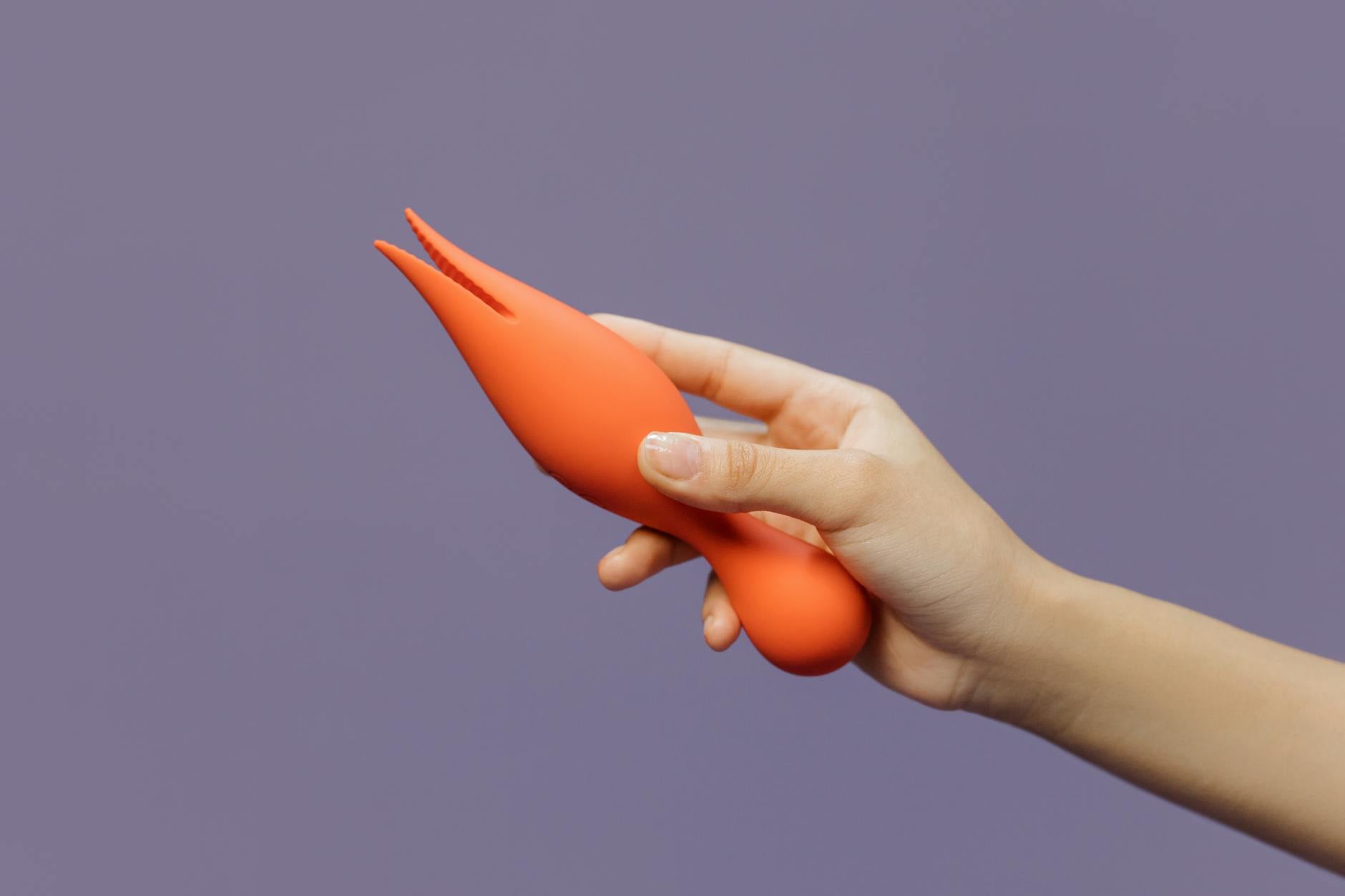
Pain during sex doesn't just hurt in the moment. It rewires how your body responds to touch, how you approach intimacy, and honestly, how you feel about yourself. You start bracing before anything even happens. Your nervous system learns that this thing you want to want is actually a threat. That's not a character flaw. That's a body doing its job.
The path back isn't about forcing yourself through more pain or white-knuckling your way to pleasure. It's about teaching your nervous system, slowly and safely, that touch can feel good again. That's where lemon vibrators come in.
When you experience pain during sex, your brain creates a protective association. It learns: "This context equals danger." Over time, that association gets stronger, not weaker, because anticipatory anxiety is its own painful stimulus. You're not imagining the tension. Your pelvic floor tightens. Your breathing shallows. Arousal becomes harder to access. It's a cycle, and it's brutally self-reinforcing.
The confidence piece is huge. If sex has hurt, you start questioning whether your body is "broken." Whether you'll ever enjoy this again. Whether your partner will get frustrated. Whether you're "too sensitive" or "too tight" or fundamentally incompatible with pleasure. None of that is true, but the feeling is real, and it compounds the physical tension.
Recovery requires three things working together: medical clarity (ruling out or treating the underlying cause), nervous system reset (learning that pleasure is possible again), and emotional permission (deciding that your pleasure matters as much as avoiding pain).
Lemon clitoral vibrators like the Lem use gentle suction rather than direct vibration. That distinction matters for healing. Traditional vibrators often feel too intense when you're relearning pleasure because they require a level of tissue sensitivity that might still be ramped up from pain. Suction stimulates the clitoral complex without the same mechanical friction.
Here's what that actually means for someone recovering from painful sex: you can start with lower patterns (the Lem has multiple settings), control the intensity yourself, and build arousal gradually without triggering protective tension. You're not racing toward orgasm. You're proving to your nervous system that this touch is safe.
Many of my clients find that using a lemon vibrator solo first is crucial. There's no performance pressure. No partner's needs shaping the timeline. No historical pattern of pain waiting to resurface. You're building new neural pathways in a contained, pressure-free environment.
Something shifts when you have an orgasm after months or years of pain-free intimacy being impossible. It's not just physical. It's evidence that your body still works. That pleasure isn't off-limits. That you're not broken.
I've watched clients move from "I don't think I can feel pleasure again" to "I can feel it, and I get to control how much and how fast." That agency is the real healing. When you're using a lemon vibrator, you set the pattern. You change it if it feels like too much. You stop if you need to. That's the opposite of the helplessness that comes with painful sex.
Then, when you're ready, that confidence transfers. You know what pleasure feels like again. You know you're capable of it. You bring that into partnered sex without the same level of bracing or dread.
First, separate your pleasure tool from the context that hurt. If penetrative sex was painful, a lemon vibrator (which focuses on clitoral sensation) lets you rebuild arousal without triggering that trauma response. You're building pleasure in a different system first, which is smart neurology.
Second, timing matters. Longer warm-up periods help. Pain creates tension, and tension needs to release before pleasure is accessible. Budget 10-15 minutes of low-intensity stimulation before moving to higher patterns. Your nervous system is learning that touch stays gentle and safe.
Third, lube matters not just for sensation but for confidence. If pain involved dryness or friction, using lube again (even when it might not be strictly necessary) signals to your nervous system: "We're going to be careful about this." It's partly physical, partly psychological, and both parts count.
There's no timeline, but here's how I usually think about it. You're ready to involve a partner when you've had consistent pleasure on your own, when you can feel arousal building, and when you can imagine partnered touch without that automatic bracing sensation. Not zero anxiety. Just enough trust that your body isn't immediately going defensive.
The conversation with your partner matters as much as the physical part. Separate "My body is healing" from "I need you to do X differently." One is informational. The other is collaborative problem-solving. If pain was penetrative, you might use a lemon clitoral vibrator during partnered sex, not instead of partnered sex. It's additive. You're building arousal together in a way that feels safe.
If your partner gets impatient or treats this like a project to "fix," that's a relationship problem wearing a sex problem's costume. Healing requires patience from both people.
Don't skip this. Pain during sex often comes with grief. Grief for the sex life you expected to have. Grief for the months or years you avoided intimacy. Sometimes grief for trust lost with a partner if they didn't respond well to your pain.
That grief is valid, and it's separate from physical recovery. You can be healing physically while processing loss emotionally. A good therapist who specializes in sex or couples work can help with both.
What a lemon vibrator can do is let you reclaim agency in your pleasure. It's not a substitute for addressing the grief, but it's a tangible sign that you're choosing pleasure for yourself again. That matters.
If pain during sex is still present, see a gynecologist trained in pelvic pain before you start this work. Some pain needs treatment (topical estrogen, pelvic floor physical therapy, vulvodynia assessment). You can't rewire pleasure on top of active pain.
If anxiety about sex is severe, a sex therapist trained in trauma is worth the investment. Pain during sex can create genuine trauma responses, and those benefit from specific therapeutic approaches.
Use the lemon vibrator as part of a broader plan, not the whole plan. But it can be a powerful part.
Honestly, the biggest change I see in clients who move through this isn't that their orgasms feel better. It's that they stop defending themselves so hard. They breathe deeper. They're less trapped in their heads narrating what's "supposed" to happen. They remember that their pleasure is worth taking time for.
A lemon vibrator does that by being gentle, controlled, and entirely yours. No pressure. No past patterns. Just slow, safe stimulation that teaches your nervous system: this is okay. You're safe. Pleasure is still available to you.
There's no fixed timeline because it depends on the cause of the pain and how long you experienced it. Some people notice a shift in a few weeks of consistent solo exploration. Others take months. What matters is consistency and gentleness, not speed. Think of it as retraining, not racing.
Yes, but it's part of a broader approach. A lemon clitoral vibrator focuses on external sensation, so it can rebuild arousal and confidence while you're addressing the penetration piece separately with medical support or pelvic floor therapy. They work better together than alone.
That's common after pain. Your nervous system has been in protection mode, which dampens all sensation, not just pain. Start with the lowest pattern, give it time, and don't interpret low sensation as failure. Sometimes the first few sessions are just your body learning that this is safe. Sensation often returns as you relax more deeply.
That depends on your relationship and communication style. If you're moving toward partnered sex again, transparency helps. You might frame it as: "I'm using this to rebuild my confidence because I want to feel good again, and I want that with you." Some partners find it hot. Some need reassurance that it's not about them. Either way, honesty beats secrecy.
Lem vibrators are often easier on the system than other stimulation because the suction pattern doesn't require the same level of relaxation that direct vibration does. That said, if pelvic floor tension is severe, work with a pelvic floor physical therapist. Pleasure tools are helpful, but they work best alongside professional support.
That's a trauma response, and it's worth unpacking with a therapist. Sometimes pain gets tangled with shame or beliefs about what you "should" want. A lemon vibrator is just a tool. The real work is deciding that your pleasure deserves space in your life, with or without a partner. You deserve that.
Restoring confidence after painful sex isn't about erasing what happened. It's about building new evidence that pleasure is still possible. A lemon vibrator can be that evidence. Gentle, controlled, entirely on your terms.